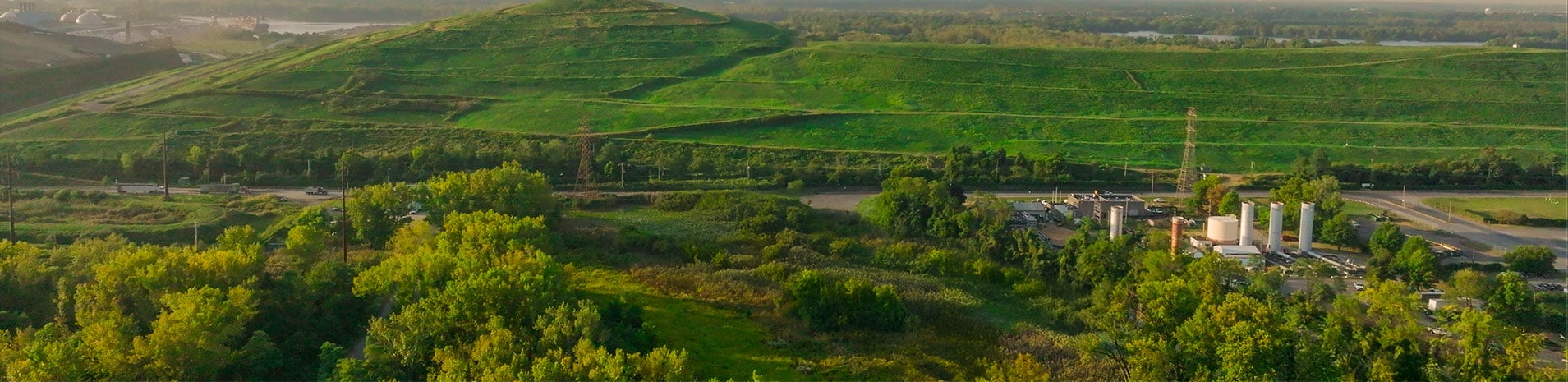
We’re Innovating for Climate Progress
Our climate impact goal, validated by the Science Based Targets initiative (SBTi), is to reduce absolute Scope 1 and 2 GHG emissions 42% by 2031 from a 2021 base year1.
We’ve achieved a 27% reduction in Scope 1 and 2 GHG emissions since 2021.
We are also targeting beneficial use of 65% of our captured landfill gas by 20272.
We achieved 51% of landfill gas recovered for beneficial use in 20253.
1 The target boundary includes land-related emissions and removals from bioenergy feedstocks.
2 Updated target year to align with renewable natural gas facilities timeline.
3 The Landfill Gas Recovered for Beneficial Use calculation methodology was updated in 2025; values from 2021-2025 reflect this revised approach.
Our Impact:
Looking Ahead:
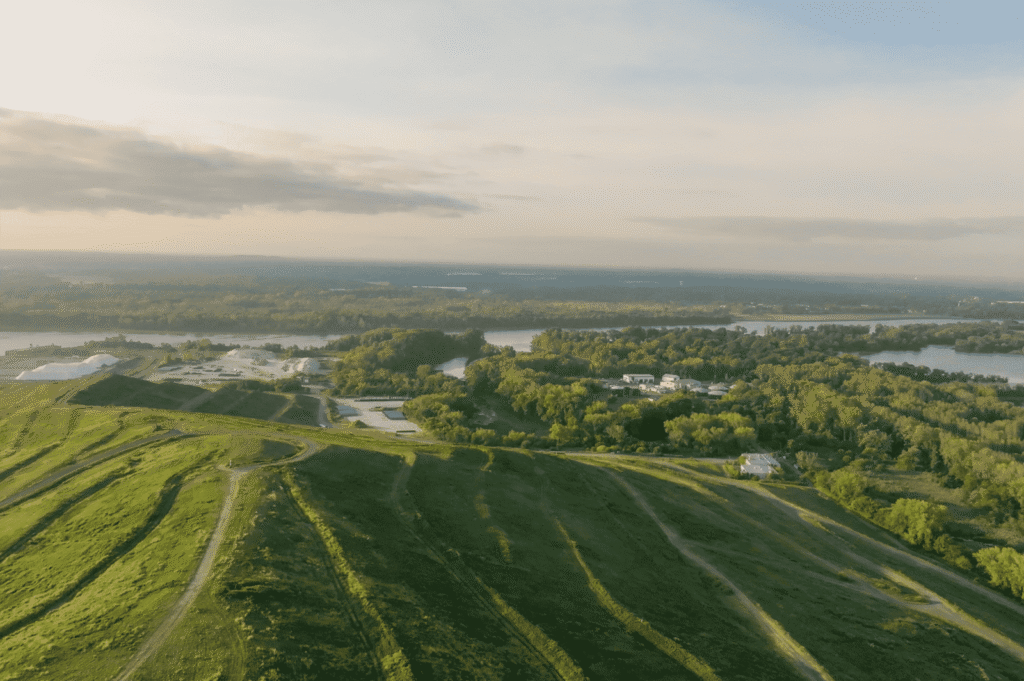
From capping landfill acres to expanding gas collection and fueling infrastructure, we are growing our vertically integrated RNG model to drive emissions reductions at scale.
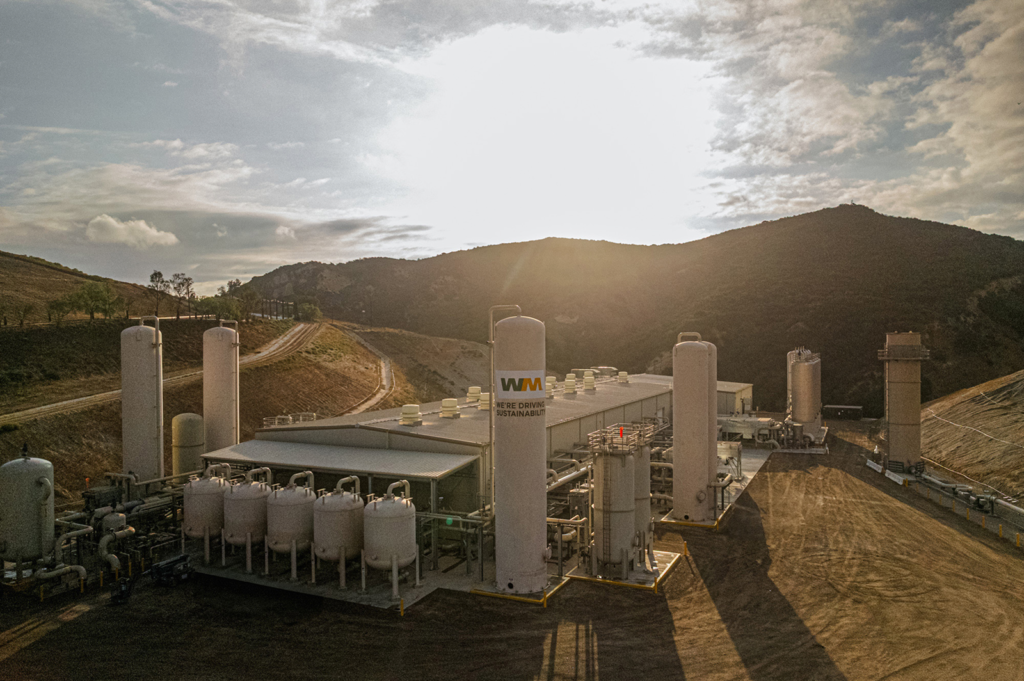
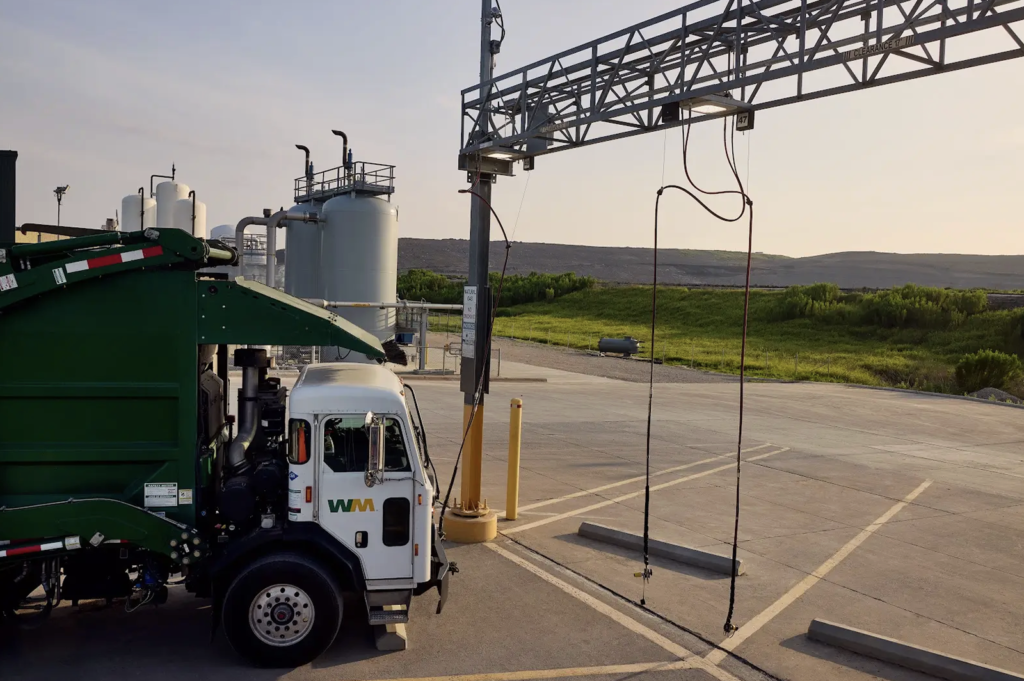
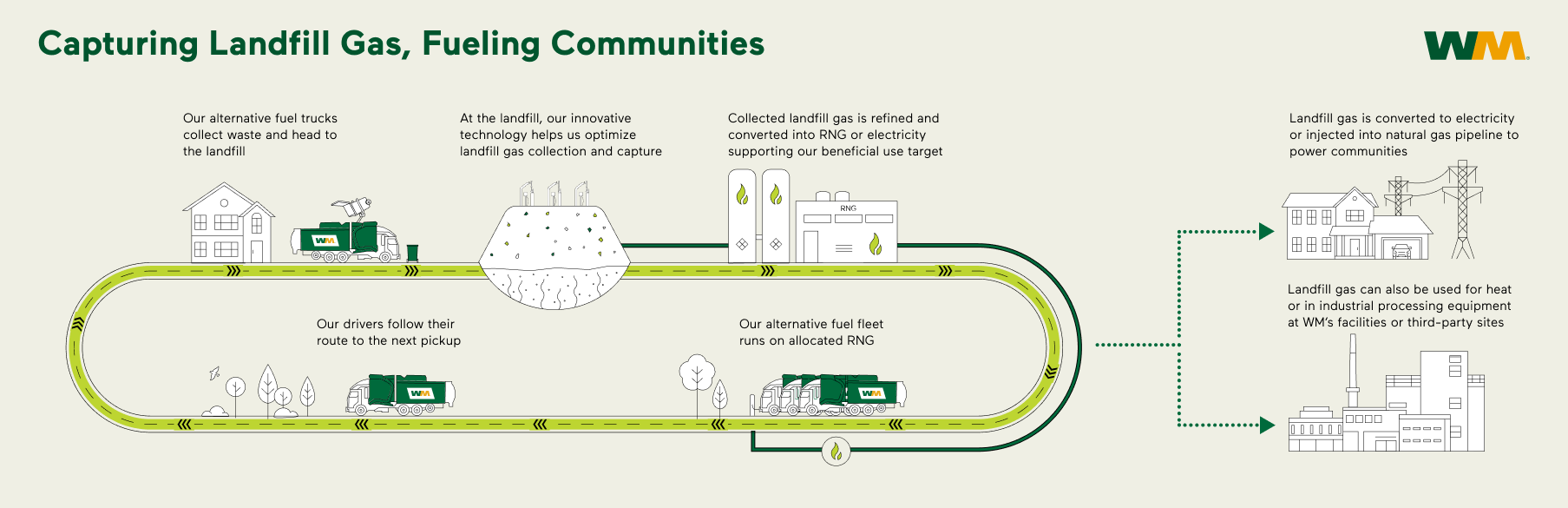
Capturing Landfill Gas, Fueling Communities
Advanced gas collection systems at our landfills help reduce emissions and capture landfill gas that can then be converted into pipeline-quality renewable natural gas (RNG) or electricity. This renewable energy can power communities across North America and be allocated to the fuel consumption for our alternative fuel fleet. These capabilities further support circularity innovation by reimagining waste as an energy source.
Delivering on our Science-Based Climate Target

Delivering on our Science-Based Climate Target
WM’s approach to climate action is grounded in a Science Based Targets initiative (SBTi)-validated commitment to reduce Scope 1 and 2 GHG emissions by 42% by 2031 from a 2021 baseline1. Since establishing this target, WM has achieved a 27% reduction in combined Scope 1 and 2 emissions. This sustained progress reflects disciplined execution focused on our highest-impact sources, particularly landfill operations and fleet, which accounts for nearly 90% of total Scope 1 and 2 emissions.
The keys to success for 2025 GHG emissions reductions include:
- The most significant driver of Scope 1 reductions has been the implementation of landfill emissions reduction projects, including improved landfill gas collection and control systems. These efforts captured 84% of landfill gas in 2025, further advancing our capture performance and enabling RNG production.
- Transitioning fleet energy use toward alternative fuels such as CNG. In 2025, 93% of fuel in our alternative fuel fleet was allocated to RNG, up from 74% in 2024.
- A key contributor to Scope 2 emissions reductions has been renewable energy procurement. Through the purchase of Renewable Energy Certificates (RECs) and Renewable Energy Guarantees of Origin (REGOs), we offset approximately 60% of our total electricity consumption globally, including 100% of electricity consumption across our United Kingdom operations.
Learn more about our climate strategy, emissions performance and risk management in our Climate Brief.
1 The target boundary includes land-related emissions and removals from bioenergy feedstocks.
Next
Landfill – Scaling Measurement Technologies
Scaling Measurement Technologies
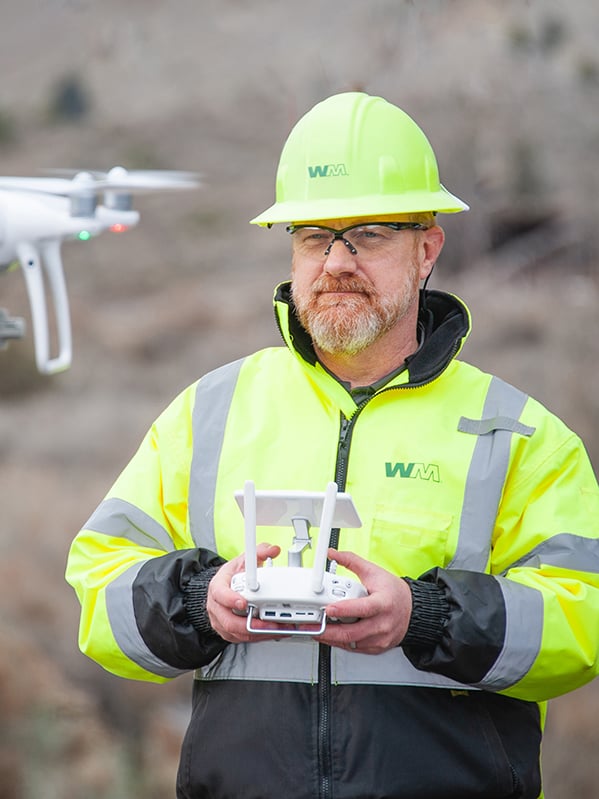
WM applies a layered approach Landfill Measurement Technology that integrates satellite, aircraft, drone and ground-based technologies to account for the complex factors influencing methane emissions, such as topography, weather and operational activities.
In 2025, we expanded comparative measurement efforts across our landfill network, scaling satellite measurements to a monthly cadence at 45 sites and conducting at least one aircraft survey at approximately 100 sites. Consistent with findings from controlled-release and peer-reviewed studies, high-resolution aircraft data proved effective in identifying localized emission sources, prompting plans to expand aerial monitoring frequency to monthly at approximately 15 sites and quarterly at nearly 50 sites in early 2026.
These efforts help us collect more landfill gas for beneficial use. In 2025, we collected 84% of landfill gas1.
Learn more about our approach to landfill stewardship
1 Landfill gas generated from waste is cyclical over a period of decades. The amount and rate of gas generation is dependent on several factors, including waste volume, composition, climatic factors and operational controls.
Next
Fleet – Our Sustainable Fleet
Our Sustainable Fleet
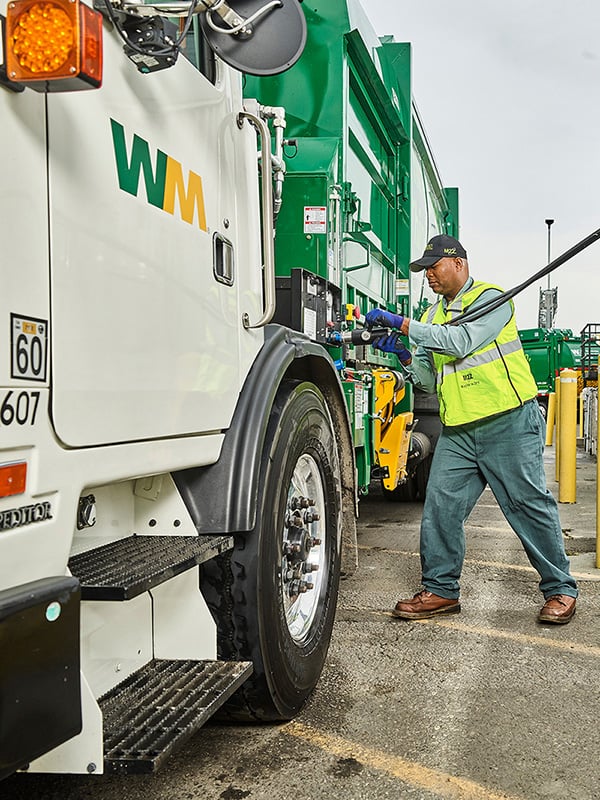
WM operates North America’s largest alternative-fuel fleet in the industry, making fleet operations a central lever in our GHG emissions reduction strategy.
In 2025, we:
- Allocated renewable natural gas to 93% of our alternative fuel fleet’s fuel consumption1.
- Opened a $10 million CNG fleet facility in Tupelo, Mississippi, that can fuel and maintain up to 26 vehicles at a time.
- Operated six mobile integrated gas stations, which can be deployed within three to seven days to provide fueling capability anywhere in North America.
- Reached a 44% estimated reduction in fleet emissions since 2021.
1 Alternative Fuel Vehicles in Collection Fleet includes Core Solid Waste and Recycling Vehicles that run on compressed natural gas (CNG) and liquefied natural gas (LNG) and does not account for on-road hours.
Next
Climate – Delivering on our Science-Based Climate Target
News & Press Coverage
How EPR and policy is reshaping WM's facilities – Resource Recycling
Resource Recycling
Denver expands compost program to allow more types of waste
The Denver Post
Collaboration Will Be Critical to Recycling’s Next Chapter
Waste 360
Safe Home Care Starts With Waste Management – Modern Healthcare
Modern Healthcare
The Next Frontier for Autonomous Vehicles Is Burying Your Garbage
Wall Street Journal
Construction begins to turn former Lorton landfill into new public park
FFX Now